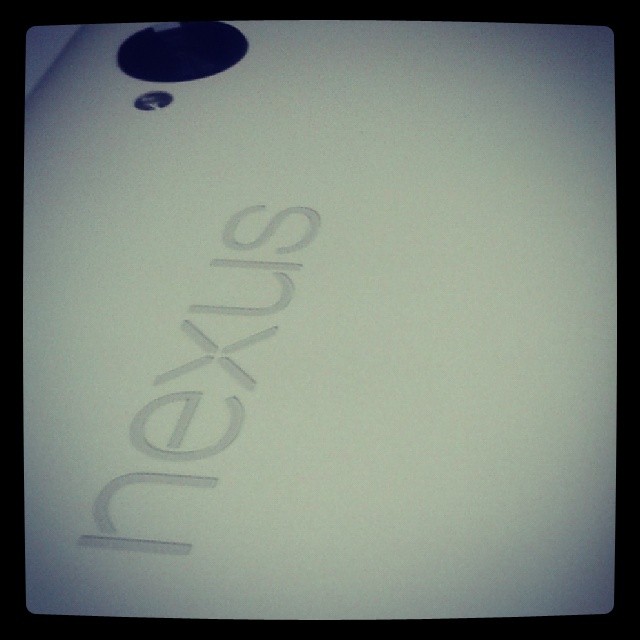
To make calls and use mobile Internet on your Nexus 5, you will need to insert an active micro SIM Card. If no card is inserted, the message “No SIM card” appears on the phone’s lock screen.
To insert the sim card you will need to eject the SIM card tray or slot. This is located in the right hand side of the phone. The eject button is a small hole just below the tray door(on the top below the Power on button).
Android gives vibration feedback on some touch events like press of back button. This can be useful and also be a pain. Here is how to disable this feature:
Google Keyboard is the default keyboard in the Nexus 5. By default, its configured to enable vibration on key press. If you are someone who dislikes this feature, here is a simple way of disabling it:
{adinserter 3}
Go to Home -> Settings -> Language and Keyboard
Locate “Google Keyboard” and press the settings button next to it.
Seagate U6 3.5 inch 40 GB hard disk. (Photo credit: Wikipedia)
SeaTools is a diagnostic tool to check your hard disk for errors and failure. Its an extremely useful tool to have around as hard disks fail all the time and recognizing a failing hard disk can save you a lot of trouble in the long run.
Format the USB drive and Repartition it as FAT
Give it a name like “SEATOOLS”
Mark the newly created partition as bootable – You can use Gparted to do this.
Copy “syslinux” master boot record to drive (The code below is assuming your drive is loacated at “sdb”): $ sudo dd if=/usr/lib/syslinux/mbr.bin of=/dev/sdb
Install syslinux on the drive partition: $ sudo syslinux /dev/sdb1
Mount drive. You can do this by reinserting the drive or by using a command like: $ sudo mount /dev/sdb1 /mnt
Copy the MEMDISK bootloader from /usr/share/syslinux/memdisk to the drive: $ cp /usr/lib/syslinux/memdisk /media/SEATOOLS
Copy the SeaToolsDOS223ALL.ISO to the drive
Create a file named ‘syslinux.cfg’ on the drive, with this in it (use correct .iso name):
DEFAULT SeaTools
LABEL SeaTools
LINUX memdisk
INITRD SeaToolsDOS223ALL.ISO
APPEND iso
Thats it you’re done 🙂 Try booting with it. Here’s what my usb stick looks like at the end of all of this:
If you regularly ssh to same system, ssh-copy-id allows you to login to the system directly without having to type the password each time. ssh-copy-id is a small script which copies your ssh public-key to a remote host. It appends the key to your remote authorized_keys enabling you to login without having to type your password each time.
Use it by running the following command: ‘ssh-copy-id tech@192.168.1.1‘ where ‘tech’ is the username of the remote system and ‘192.168.1.1’ its IP address. The command will ask you for the remote machine‘s password(one last time).